
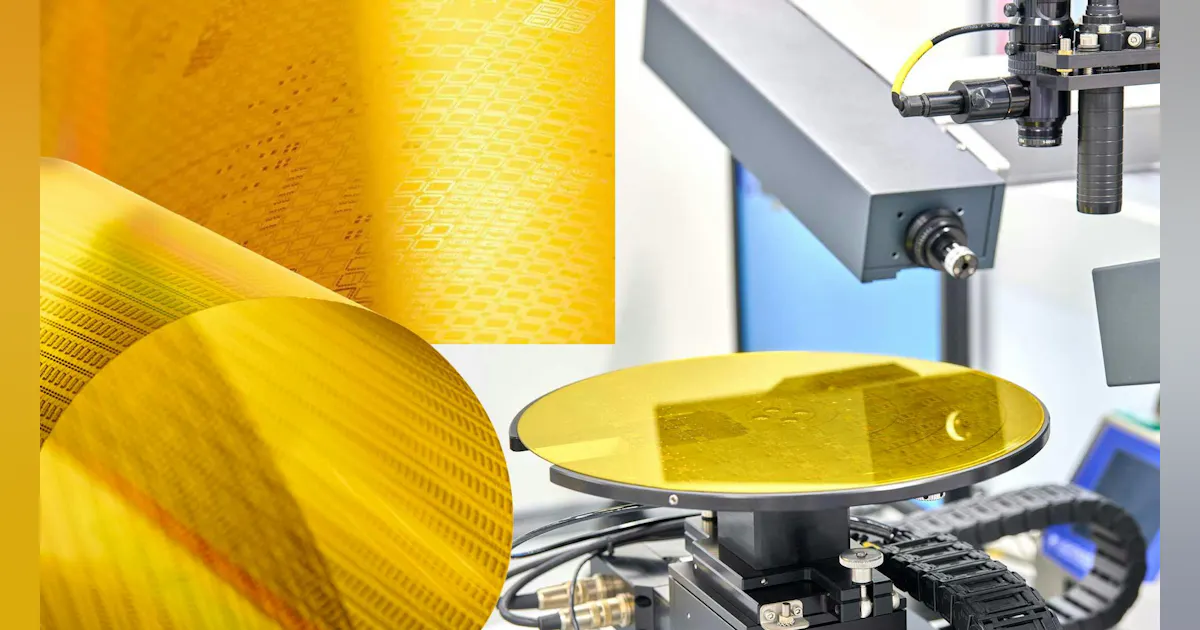
In fact, the potential for flexible chips is vast. From smart labels on food packaging that monitor freshness to flexible sensors embedded in athletic apparel to track biometrics, they enable a future where electronics are seamlessly integrated into the world around us.
Their malleable form factor makes them ideal for use in smart medical patches that are cost-effective and comfortable to wear. These could enable wound monitoring—alerting clinicians to signs of deterioration by moisture/leak detection or changes in temperature, pressure, or pH—or detect heartbeat irregularities that may foreshadow more serious coronary events.
Embedded into product packaging, they facilitate smooth, interactive consumer engagement that’s accessible with a single tap of a smartphone. Discreet and protected, they can give instant access to dynamic, personalized content, helping to drive loyalty and make every touchpoint a richer experience.
Looking to the future, they could provide new, powerful ways to interact with our environment, enabling monitoring, detection, and autonomous decision-making as part of sensor swarms—clusters of interconnected sensors working collaboratively to collect vast amounts of data in real-time. Here, the applications are as diverse as they are impactful, from tracking climate change and monitoring pollution levels to optimizing energy consumption or enhancing traffic management in smart city scenarios.
In virtual- and augmented-reality (VR/AR) applications, they could facilitate increasingly sophisticated remote immersive and interactive experiences embedded into more lightweight, affordable, and user-friendly glasses and headsets, or even electronic skin.
They may even have a role to play in biological computation, where microfluidics and lab-on-a-chip technologies implement operations that have historically required an entire laboratory. This innovation can make scientific research more efficient and cost-effective, but it could also democratize access to advanced diagnostic and analytical tools, potentially transforming healthcare and other fields worldwide.
Complementary Intelligence
In short, rigid and flexible semiconductors play complementary but equally valuable roles in our increasingly connected world. Flexible semiconductors will not replace rigid silicon chips. Rather, they’ll work alongside them, allowing innovators to choose the best chip for the task at hand.
By using flexible chips for low-cost, customizable intelligence, where their rapid production, carbon footprint, and form factor bring advantages, we can free rigid silicon chips, with their heavier carbon footprint, for workloads where power and optimal generalized performance are imperative.
The future of electronics will build on the robust credentials of rigid semiconductors with the low-cost agility of their flexible counterparts, giving innovators endless versatility and the ability to meet their design challenges, however big or small.
link



More Stories
Researchers Reveal Molecular Secrets of Flexible Electronics
Growth Outweighs Uncertainty for Flexible and Printed Electronics: OE-A Survey
SEMI FlexTech Announces 2026 FLEXI Award Winners