
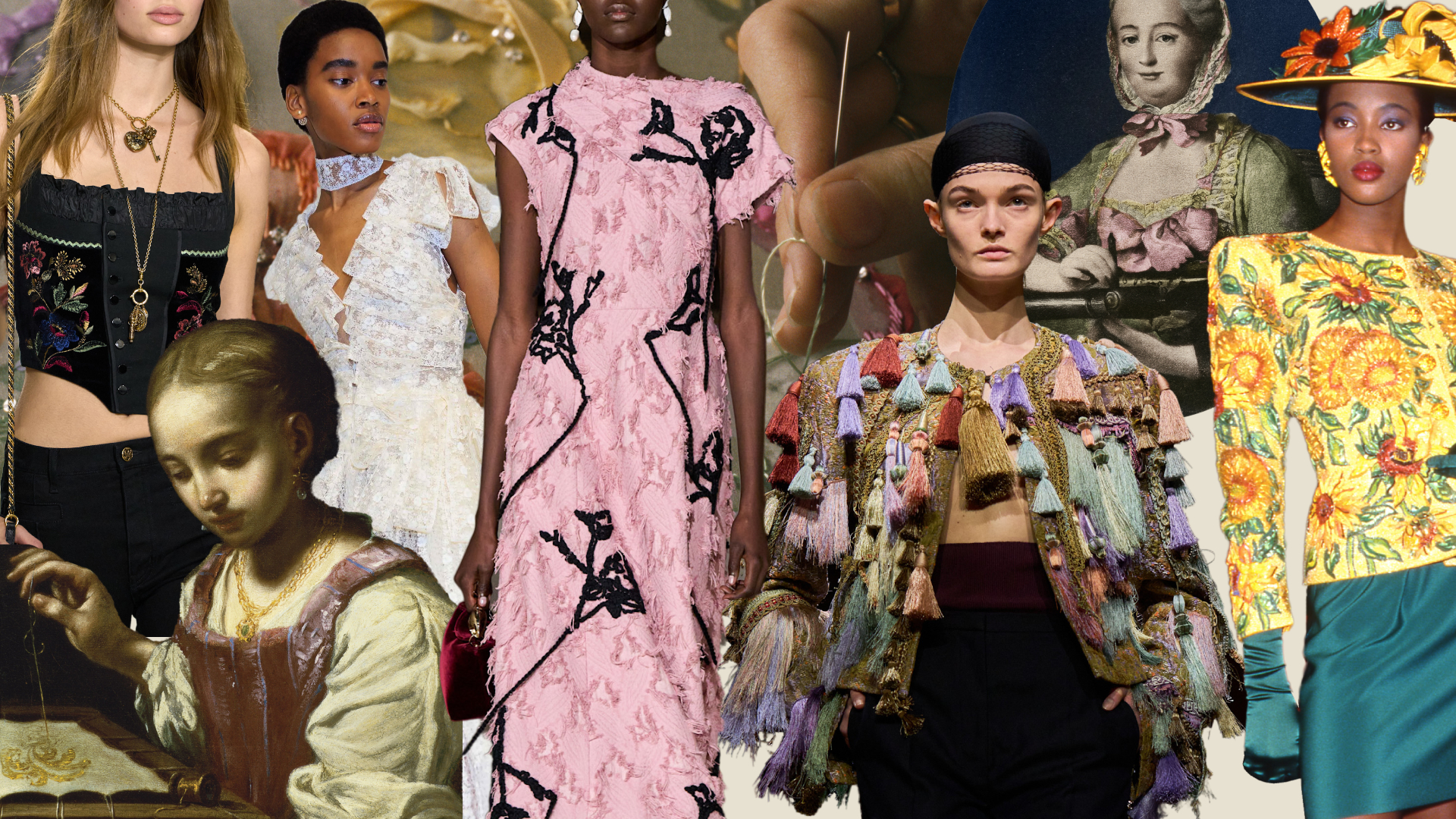
“Embroidery is to haute couture what fireworks are to Bastille Day,” said François Lesage, one of the world’s greatest embroiders and the man behind the Maison that created some of Cristobal Balenciaga, Elsa Schiaparelli, and Yves Saint Laurent’s most renowned garments.
Lesage’s quote sums up embroidery’s relationship with fashion in full. With only a needle, thread, and the painstaking efforts of the human hand, the technique is intrinsic to the industry that holds craft at its core. And its results are uniquely awe-inspiring; Lesage’s band of artisans famously spent over 600 hours embroidering 250,000 sequins in 22 colors, 200,000 beads, and 270 yards of ribbon on Saint Laurent’s iconic 1988 Vincent Van Gogh-inspired Iris jacket, considered among the most expensive haute couture garments ever made.

The Yves Saint Laurent Van Gogh-inspired jackets embroidered by Maison Lesage on the Spring 1988 ready-to-wear runway.
(Image credit: Getty Images)
Today, however, we see embroidery on more than bespoke runway creations. You’ll find slogan tees stitched with cursive and blue jeans with pockets full of beaded posies on your favorite online retailer and in the aisles at your local mall. The 2025 boho trend revival has also incited a spike in demand for artisanal needlework, from broderie anglaise blouses and peasant tops adorned with red-thread rosettes.
But before we look ahead at all the embroidery techniques trending in 2025, it’s essential to understand and appreciate its history and many iterations. Consider this a beginner’s guide to embroidery, with a breakdown of the different stitching types, shout-outs to the styles that’ve become mainstream favorites, and an ode to the brands and designers keeping the handicraft alive.
Crewelwork

Crewelwork seen in aportrait of Lady Isabella Rich by William Larkin (1580-1619) and on Chloé’s Fall 2025 runway.
(Image credit: Getty Images/Launchmetrics)
Crewelwork is a thousand-year-old form of surface embroidery that involves worsted, two-ply wool yarn—called crewel—and creates a raised, thick design. The technique predominantly depicts colorful and textured floral and fauna depictions; for example, look to the ornate, flower-piped gowns and robes worn by late 17th- and early-18th-century English nobles and the vibrant, textural fabrics from India’s Kashmir region. Alternatively, the rainbow-colored flowers found on Chloé’s Fall 2025 pay homage to the historic embroidery style.

Staud
Casey Embroidered Floral Strapless Cocktail Dress

Manolo Blahnik
Carolyne Floral-Embroidered Silk Pumps

Lingua Franca
Ilias Skirt

Anthropologie
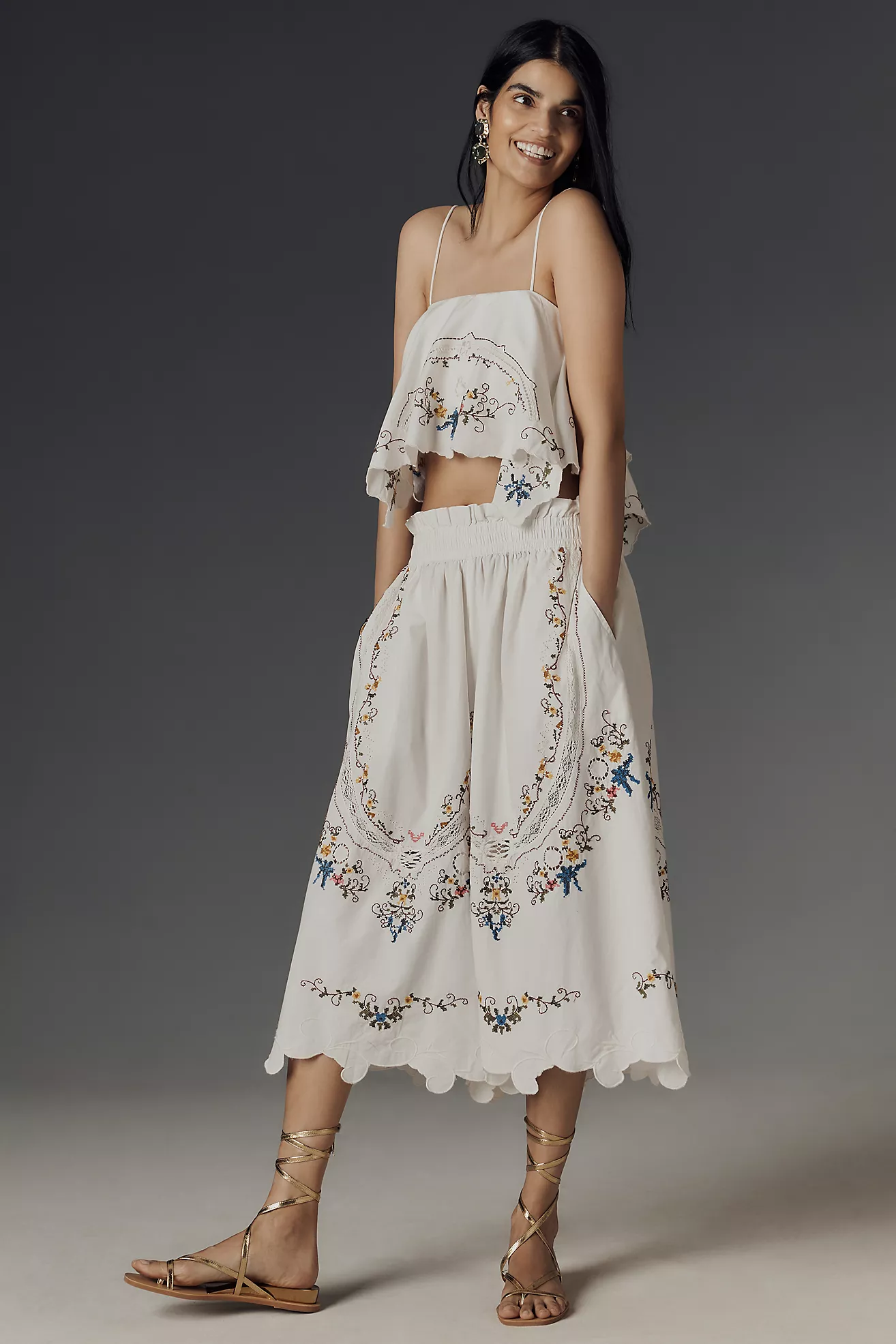
By Anthropologie Embroidered Culottes

BODE
Garden Party Bead-Embellished Embroidered Silk-Satin Shirt
Broderie Anglaise

From London in the 1950s to Michael Kors’ Spring 2025 runway, broderie anglaise has a far-spanning legacy.
(Image credit: Getty Images/Launchmetrics)
You are likely familiar with broderie anglaise—if not by name, by look. The style involves cutwork embroidery where the base fabric is punched with ornamental holes, and the edges of those cuts are sewn over to create a raised lace-like look. It is widely believed to have originated in the Czech Republic but was later popularized in England’s Victorian Era—the term literally translates as “English embroidery” in French—on undergarments, home linens, and baby clothes. Now, broderie anglaise’s appeal is much broader, and you’ll spot the cutwork embroidery trimming linen pants and on summer dresses.

DÔEN
Henri Voile Eyelet Top

Loeffler Randall
Clover Grosgrain-Trimmed and Broderie Anglaise Canvas Espadrilles

Ramy Brook
Martha Broderie Anglaise Button-Down Jacket

J.Crew
Garçon Classic Shirt in Eyelet Linen

Ganni
Betzy Broderie Anglaise Crop Jeans

Charo Ruiz
Livvy Broderie Anglaise Cotton-Blend Midi Skirt
Goldwork

Goldwork seen in portrait of ‘Girl Sewing’, found in the collection of Thyssen-Bornemisza Collections, and on the Burberry Fall 2025 runway.
(Image credit: Getty Images/Launchmetrics)
As its name suggests, goldwork involves embroidering gold metallic thread onto textiles, typically opulent velvet and rich linens. The flashy technique is deeply linked to Medieval England, where nobles used embroidered tapestry as diplomatic gifts, and the clergy integrated the technique into their liturgical garments, shrine coverings, and furnishings. Goldwork is easy to spot, not only due to its metallic look but also because of its frequent use in today’s fashion, like on Burberry’s Fall 2025 runway.

Two by Vince Camuto
Embroidered Cotton Button-Up Shirt

Jimmy Choo
20 Metallic Leather-Trimmed Logo-Embroidered Straw Platform Espadrilles

Van Cleef & Arpels
Perlée Watch, 23 mm

Van Cleef & Arpels
Perlée Signature Bracelet, Medium Model

Sézane
Alejandro Trousers

Farm Rio
Lace Nature Midi-Skirt
Bead and Sequin Embroidery

Flowers are delicately stitched onto fabric at François Lesage’s workshop and a silver sequined dress on Louis Vuitton’s Fall 2025 runway.
(Image credit: Getty Images/Launchmetrics)
Bead and sequin embroidery has existed for centuries, dating back to the Ancient Egyptians and the Roman Empire. In the fashion history timeline, the visual medium became incredibly popular around the 20th century as a more visually enticing embellishment than simplistic cotton stitching. Fashion designers like Elsa Schiaparelli and Christian Dior started incorporating beads, faceted glass, and light-catching sequins in their eveningwear to appeal to affluent, party-going clientele. Of course, you’ll now find bead and sequin embroidery on almost every runway in today’s contemporary circuit.

Staud
Tommy Floral Beaded Shoulder Bag

SANDRO
T-Shirt With Beaded Details

self-portrait
Crepe Bow Mini Dress

Van Cleef & Arpels
Perlée Diamonds Bracelet, 5 Rows, Medium model

Weekend Max Mara
Monza Beaded Miniskirt

superdown
Georgia Sequin Top
Blackwork

Blackwork embroidery depicted in a portrait of Elizabeth I and in real life on Dior’s Fall 2025 runway.
(Image credit: Thomasina Beck/Launchmetrics)
Lastly, blackwork is a monochromatic style using black silk on a white fabric base, typically linen or cotton, that rose to popularity during England’s Tudor period, particularly during the reign of King Henry VIII and Elizabeth I (though it’s largely believed the King’s first wife, Catherine of Aragon, introduced him to it after her travels to Spain). The black stitching was predominantly used to decorate caps, collars, cuffs, sleeves, and royal household linens and furnishings. The embroidery remains a go-to for fashion designers due to its simple yet striking look, including Maria Grazia Chiuri for Dior, whose Fall 2025 collection integrated the historic style.

Lucky Brand
Embroidered Cotton Tank

AGUA BY AGUA BENDITA
Lima Tiered Embroidered Linen Mini Dress

Banana Republic
Embroidered Linen Peasant Blouse

SEA
Ambrose Cropped Bead-Embellished Embroidered Cotton-Canvas Vest

Van Cleef & Arpels
Perlée Signature Ring
Anthropologie
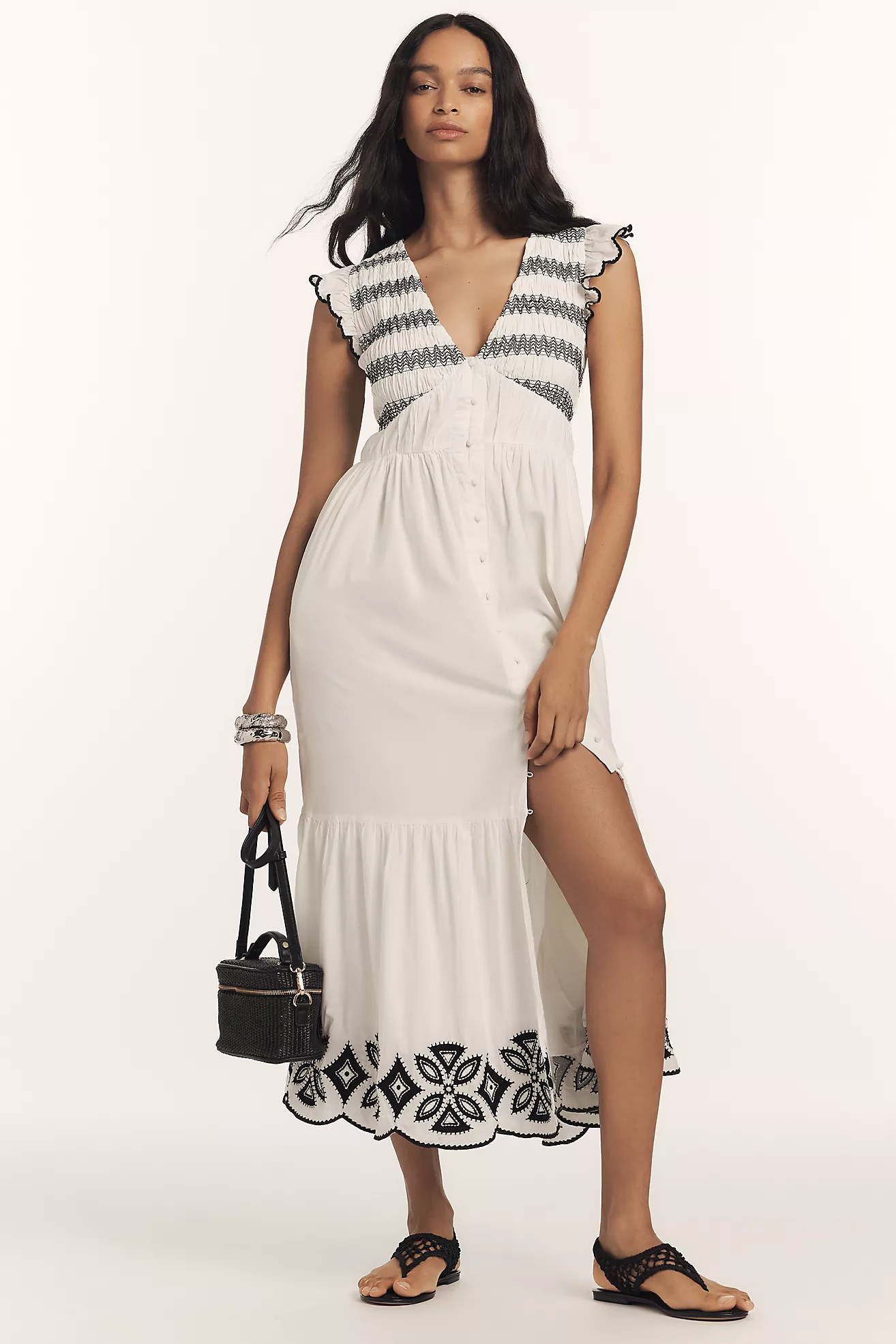
The Peregrine Midi Dress: Embroidered Smocked Edition
link



More Stories
Designing for the Girls: How Jordan Redwine Is Rewriting Luxury Fashion for Busty Women
Amanda Newman GIves Us All Of The Details On Fashion Design
Students prepare to take the runway during CO Beautillion-Cotillion fashion show