
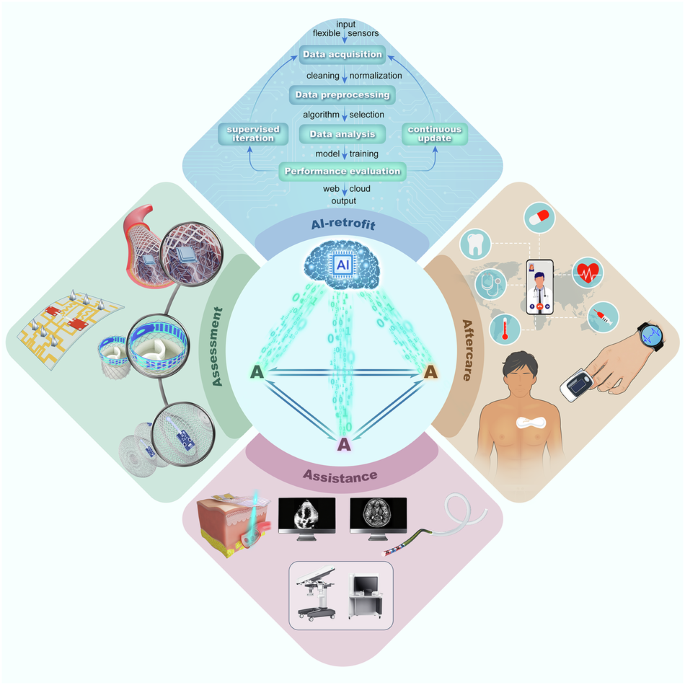
Zhou, X., Yu, L., Zhao, Y. & Ge, J. Panvascular medicine: an emerging discipline focusing on atherosclerotic diseases. Eur. Heart J. 43, 4528–4531 (2022).
GBD 2021 Diseases and Injuries Collaborators Global incidence, prevalence, years lived with disability (YLDs), disability-adjusted life-years (DALYs), and healthy life expectancy (HALE) for 371 diseases and injuries in 204 countries and territories and 811 subnational locations, 1990-2021: a systematic analysis for the Global Burden of Disease Study 2021. Lancet 403, 2133–2161 (2024).
Guo, W. & Yi, X. Advancements and future prospects in the study of panvascular disease. Clin. Hemorheol. Microcirc. 89, 198–204 (2025).
Chowdhury, M. & Secemsky, E. A. Atherectomy vs other modalities for treatment during peripheral vascular intervention. Curr. Cardiol. Rep. 24, 869–877 (2022).
Schartz, D. et al. Impact of aspiration catheter size on clinical outcomes in aspiration thrombectomy. J. Neurointerv. Surg. 15, e111–e116 (2023).
You, L., Luo, Y., Cheng, Q., Shen, L. & Ge, J. High-suitcordance intelligent fibers for panvascular disease monitoring-intervention. Adv. Fiber Mater. 7, 1042–1072 (2025).
Yin, Z. et al. Inkjet printing for flexible electronics: materials, processes and equipments. Chin. Sci. Bull. 55, 3383–3407 (2010).
Rogers, J. A., Someya, T. & Huang, Y. Materials and mechanics for stretchable electronics. Science 327, 1603–1607 (2010).
Song, J. K. et al. Stretchable colour-sensitive quantum dot nanocomposites for shape-tunable multiplexed phototransistor arrays. Nat. Nanotechnol. 17, 849–856 (2022).
Lee, S. et al. A shape-morphing cortex-adhesive sensor for closed-loop transcranial ultrasound neurostimulation. Nat. Electron. 7, 800–814 (2024).
Jang, J. et al. Reconfigurable assembly of self-healing stretchable transistors and circuits for integrated systems. Nat. Electron. 8, 474–484 (2025).
Jung, H. et al. Hydrogel–elastomer-based conductive nanomembranes for soft bioelectronics. Nat. Nanotechnol. 20, 1822–1830 (2025).
Veletić, M. et al. Implants with sensing capabilities. Chem. Rev. 122, 16329–16363 (2022).
Gao, W., Ota, H., Kiriya, D., Takei, K. & Javey, A. Flexible electronics toward wearable sensing. Acc. Chem. Res. 52, 523–533 (2019).
Chen, S. et al. Flexible wearable sensors for cardiovascular health monitoring. Adv. Healthc. Mater. 10, 2100116 (2021).
Kwon, K. et al. A battery-less wireless implant for the continuous monitoring of vascular pressure, flow rate and temperature. Nat. Biomed. Eng. 7, 1215–1228 (2023).
Tang, H. et al. Injectable ultrasonic sensor for wireless monitoring of intracranial signals. Nature 630, 84–90 (2024).
Wang, L. et al. Tracking peripheral artery motion and vascular resistance with a multimodal wearable sensor under pressure perturbations. J. Biomech. Eng. 144, 081003 (2022).
Haghi, M., Thurow, K. & Stoll, R. Wearable devices in medical internet of things: scientific research and commercially available devices. Healthc. Inform. Res. 23, 4–15 (2017).
Gubala, V., Harris, L. F., Ricco, A. J., Tan, M. X. & Williams, D. E. Point of care diagnostics: status and future. Anal. Chem. 84, 487–515 (2012).
Rahmani, S. et al. 3D-printed microneedles in biomedical applications. iScience 24, 102012 (2020).
Vora, L. K. et al. Microneedle-based biosensing. Nat. Rev. Bioeng. 2, 64–81 (2024).
Hu, Y., Chatzilakou, E., Pan, Z., Traverso, G. & Yetisen, A. K. Microneedle sensors for point-of-care diagnostics. Adv. Sci. (Weinh.) 11, e2306560 (2024).
Friedel, M. et al. Opportunities and challenges in the diagnostic utility of dermal interstitial fluid. Nat. Biomed. Eng. 7, 1541–1555 (2023).
Xu, J., Yang, B., Kong, J., Zhang, Y. & Fang, X. Real-time monitoring and early warning of a cytokine storm in vivo using a wearable noninvasive skin microneedle patch. Adv. Healthc. Mater. 12, e2203133 (2023).
Zheng, L., Zhu, D., Xiao, Y., Zheng, X. & Chen, P. Microneedle coupled epidermal sensor for multiplexed electrochemical detection of kidney disease biomarkers. Biosens. Bioelectron. 237, 115506 (2023). 2023.
Huang, X. et al. 3D-assembled microneedle ion sensor-based wearable system for the transdermal monitoring of physiological ion fluctuations. Microsyst. Nanoeng. 9, 25 (2023).
Ju, J., Li, L., Regmi, S., Zhang, X. & Tang, S. Microneedle-based glucose sensor platform: from vitro to wearable point-of-care testing systems. Biosensors. (Basel) 12, 606 (2022).
Rawson, T. M. et al. Microneedle biosensors for real-time, minimally invasive drug monitoring of phenoxymethylpenicillin: a first-in-human evaluation in healthy volunteers. Lancet Digit.al Health 1, e335–e343 (2019).
Li, Z. et al. Electrochemical detection of cholesterol in human biofluid using microneedle sensor. J. Mater. Chem. B 11, 6075–6081 (2023).
Dervisevic, M. et al. Wearable microneedle array-based sensor for transdermal monitoring of pH levels in interstitial fluid. Biosens. Bioelectron. 222, 114955 (2023).
Li, J. et al. Interstitial fluid biomarkers’ minimally invasive monitoring using microneedle sensor arrays. Anal. Chem. 94, 968–974 (2022).
Puttaswamy, S. V. et al. Nanophotonic-carbohydrate lab-on-a-microneedle for rapid detection of human cystatin C in finger-prick blood. ACS Nano 14, 11939–11949 (2020).
Yang, J. et al. Microneedle-based integrated pharmacokinetic and pharmacodynamic evaluation platform for personalized medicine. Nat. Commun. 16, 6260 (2025).
Ranamukhaarachchi, S. A. et al. Integrated hollow microneedle-optofluidic biosensor for therapeutic drug monitoring in sub-nanoliter volumes. Sci. Rep. 6, 29075 (2016).
Zhu, J., Zhou, X., Libanori, A. & Sun, W. Microneedle-based bioassays. Nanoscale Adv. 2, 4295–4304 (2020).
Yang, K. et al. A wearable dual-modal patch for rapid pre-hospital diagnosis of acute myocardial infarction. ACS Nano 19, 23969–23981 (2025).
Chang, A. et al. Integration of chemical and physical inputs for monitoring metabolites and cardiac signals in diabetes. Nat. Biomed. Eng. 10, 94–109 (2026).
Kutys, M. L. & Chen, C. S. Forces and mechanotransduction in 3D vascular biology. Curr. Opin. Cell Biol. 42, 73–79 (2016).
Trimm, E. & Red-Horse, K. Vascular endothelial cell development and diversity. Nat. Rev. Cardiol. 20, 197–210 (2023).
Shi, J., Yang, Y., Cheng, A., Xu, G. & He, F. Metabolism of vascular smooth muscle cells in vascular diseases. Am. J. Physiol. Heart Circ. Physiol. 319, H613–H631 (2020).
Wei, K., Nguyen, H. N. & Brenner, M. B. Fibroblast pathology in inflammatory diseases. J. Clin. Invest. 131, e149538 (2021).
Chistiakov, D. A. et al. Mechanisms of foam cell formation in atherosclerosis. J. Mol. Med. (Berl.) 95, 1153–1165 (2017).
Lee, M. S. & Banka, G. In-stent restenosis. Interv. Cardiol. Clin. 5, 211–220 (2016).
Mauri, L. et al. Relationship of late loss in lumen diameter to coronary restenosis in sirolimus-eluting stents. Circulation 111, 321–327 (2005).
Chen, X., Assadsangabi, B., Hsiang, Y. & Takahata, K. Enabling angioplasty-ready “smart” stents to detect in-stent restenosis and occlusion. Adv. Sci. (Weinh.) 5, 1700560 (2018).
Rigo, B. et al. Soft implantable printed bioelectronic system for wireless continuous monitoring of restenosis. Biosens. Bioelectron. 241, 115650 (2023).
Hoare, D. et al. Predicting cardiovascular stent complications using self-reporting biosensors for noninvasive detection of disease. Adv. Sci. 9, 2105285 (2022).
You, L., Shen, L. & Ge J. The foundation and development of China’s National Basic Science Center for panvascular interventional complex systems: pioneering device-vessel suitcordance research. Eur. Heart J. 46, 3400-3403 (2025).
Wang, L. et al. Ultra-sensitive wireless pressure sensor for real-time cardiovascular restenosis monitoring in smart stents. IEEE 38th Int. Conf. Micro Electro Mech. Syst. (MEMS), 12–15 (2025).
Xu, H. et al. Flexible tensile strain-pressure sensor with an off-axis deformation-insensitivity. Nano. Energy 99, 107384 (2022).
Sun, M. et al. Flexible graphene field-effect transistors and their application in flexible biomedical sensing. Nano-Micro Lett. 17, 34 (2025).
Wang, L., Jackman, J. A., Ng, W. B. & Cho, N.-J. Flexible, graphene-coated biocomposite for highly sensitive, real-time molecular detection. Adv. Funct. Mater. 26, 8623–8630 (2016).
Gao, J. et al. Ultrasensitive label-free MiRNA sensing based on a flexible graphene field-effect transistor without functionalization. ACS Appl. Electron. Mater. 2, 1090–1098 (2020).
Hao, Z. et al. Measurement of cytokine biomarkers using an aptamer-based affinity graphene nanosensor on a flexible substrate toward wearable applications. Nanoscale 10, 21681–21688 (2018).
Chen, L. et al. A DNA-functionalized graphene field-effect transistor for quantitation of vascular endothelial growth factor. Sens. Actuators B. 351, 130964 (2022).
Ashraf, J. et al. Conducting Polymer-Infused Electrospun Fibre Mat Modified by POEGMA Brushes as Antifouling Biointerface. Biosensors (Basel.) 12, 1143 (2022).
Zhang, S., Liu, W., Wu, Z. & Chen, H. Tri-functional platform for the facile construction of dual-functional surfaces via a one-pot strategy. Mater. Chem. B. 8, 5602–5605 (2020).
Sheng, D. et al. Phosphorylcholine/heparin composite coatings on artificial lung membrane for enhanced hemo-compatibility. Langmuir 39, 9796–9807 (2023).
Zhang, Z., Chen, S., Chang, Y. & Jiang, S. Surface grafted sulfobetaine polymers via atom transfer radical polymerization as superlow fouling coatings. Phys. Chem. B. 110, 10799–10804 (2006).
Wu, Y. et al. 5 years of serial intravascular imaging outcomes of XINSORB sirolimus-eluting bioresorbable vascular scaffold. JACC Cardiovasc. Interv. 12, 602–603 (2019).
Ouyang, H. et al. A bioresorbable dynamic pressure sensor for cardiovascular postoperative care. Adv. Mater. 33, e2102302 (2021).
Chen, X. & Ahn, J. H. Biodegradable and bioabsorbable sensors based on two-dimensional materials. J. Mater. Chem. B 8, 1082–1092 (2020).
Sun, Z. Synchrotron radiation computed tomography assessment of calcified plaques and coronary stenosis with different slice thicknesses and beam energies on 3D printed coronary models. Quant. imaging Med. Surg. 9, 6–22 (2019).
Ginn-Hedman, A. M. et al. Diffusible contrast-enhanced micro-CT improves visualization of stented vessels. Cardiovasc. Pathol. 60, 107428 (2022).
Vennemann, B., Obrist, D. & Rösgen, T. A smartphone-enabled wireless and batteryless implantable blood flow sensor for remote monitoring of prosthetic heart valve function. PLoS One 15, e0227372 (2020).
Jalal, Z. et al. Long-term complications after transcatheter atrial septal defect closure: a review of the medical literature. Can. J. Cardiol. 32, 1315.e11–1315.e18 (2016).
Wang, S., Qiao, W. & Dong, N. Residual shunt and microthrombosis associated with new-onset migraine after transcatheter atrial septal defect closure. Eur. Heart J. 44, 4605 (2023).
Criscuolo, V. et al. Double-framed thin elastomer devices. ACS Appl. Mater. Interfaces 12, 55255–55261 (2020).
Hu, X., Chen, A., Luo, Y., Zhang, C. & Zhang, E. Steerable catheters for minimally invasive surgery: a review and future directions. Comput. Assist. Surg. 23, 21–41 (2018).
Safian, R. D. Magnetic navigation: what’s the attraction?. Cathet. Cardiovasc. Interv. 84, 668–669 (2014).
Limpabandhu, C., Hu, Y., Ren, H., Song, W. & Tse, Z. T. H. Actuation technologies for magnetically guided catheters. Minim. Invasive Ther. Allied Technol. 32, 137–152 (2023).
Singh, A. & Mehta, Y. Intraoperative aortic dissection. Ann. Thorac. Surg. 18, 537–542 (2015).
Kobayashi, M., Cheng-Kuei, J. & Levesque, D. Flexible ultrasonic transducers. IEEE Trans. Ultrason. Ferroelectr. Freq. Control 53, 1478–1486 (2006).
Manwar, R., Kratkiewicz, K. & Avanaki, K. Overview of ultrasound detection technologies for photoacoustic imaging. Micromachines (Basel) 11, 692 (2020).
Chen, Y. et al. High-frequency PIN-PMN-PT single crystal ultrasonic transducer for imaging applications. Appl. Phys. A. 108, 987–991 (2012).
Schmitz, G. & Dencks, S. Ultrasound imaging. Recent Results Cancer Res. 216, 135–154 (2020).
Park, E. Y., Lee, H., Han, S., Kim, C. & Kim, J. Photoacoustic imaging systems based on clinical ultrasound platform. Exp. Biol. Med. (Maywood.) 247, 551–560 (2022).
Wang, C. et al. Bioadhesive ultrasound for long-term continuous imaging of diverse organs. Science 377, 517–523 (2022).
Lin, M. et al. A fully integrated wearable ultrasound system to monitor deep tissues in moving subjects. Nat. Biotechnol. 42, 448–457 (2024).
Liu, T. et al. Flexible thin-film PZT ultrasonic transducers on polyimide substrates. Sensors 21, 1014 (2021).
Liu, W., Zhu, C. & Wu, D. Flexible and stretchable ultrasonic transducer array conformed to complex surfaces. IEEE Electron. Device Lett. 42, 240–243 (2021).
Zhou, X. et al. Sputtered ZnO film on aluminium foils for flexible ultrasonic transducers. Ultrasonics 54, 1991–1998 (2014).
Hu, H. et al. A wearable cardiac ultrasound imager. Nature 613, 667–675 (2023).
Yuan, J. et al. Skin-adaptive focused flexible micromachined ultrasound transducers for wearable cardiovascular health monitoring. Sci. Adv. 11, eadw7632 (2025).
Kang, D. H. et al. Silicon nanocolumn-based disposable and flexible ultrasound patches. Nat. Commun. 16, 6609 (2025).
van Neer, P. L. M. J. et al. Flexible large-area ultrasound arrays for medical applications made using embossed polymer structures. Nat. Commun. 15, 2802 (2024).
Ma, J. et al. Procedural simplification in mitral valve transcatheter edge-to-edge repair: full echocardiographic guidance and outcomes. IJC Heart Vasc. 59, 101730 (2025).
Dong, J. et al. Embracing a new era of echocardiography-guided percutaneous and non-fluoroscopical procedure for structure heart disease. Med. Rev. 5, 174–176 (2025).
Sousonis, V. et al. The use of Intracardiac Echocardiography in Catheter Ablation of Atrial Fibrillation. Curr. Cardiol. Rep. 26, 893–901 (2024).
Wang, X., Ji, Z., Yang, S. & Xing, D. Morphological-adaptive photoacoustic tomography with flexible transducer and flexible orientation light. Opt. Lett. 42, 4486–4489 (2017).
Huynh, N. T. et al. A fast all-optical 3D photoacoustic scanner for clinical vascular imaging. Nat. Biomed. Eng. 9, 638–655 (2025).
Yang, X., Chen, Y. H., Xia, F. & Sawan, M. Photoacoustic imaging for monitoring of stroke diseases: a review. Photoacoustics 23, 100287 (2021).
Neprokin, A., Broadway, C., Myllylä, T., Bykov, A. & Meglinski, I. Photoacoustic Imaging in Biomedicine and Life Sciences. Life (Basel.) 12, 588 (2022).
Matsumoto, Y. et al. Visualising peripheral arterioles and venules through high-resolution and large-area photoacoustic imaging. Sci. Rep. 8, 14930 (2018).
Zhang, Y. et al. Ultrafast longitudinal imaging of haemodynamics via single-shot volumetric photoacoustic tomography with a single-element detector. Nat. Biomed. Eng. 8, 712–725 (2024).
Pashaei, V. et al. Flexible body-conformal ultrasound patches for image-guided neuromodulation. IEEE Trans. Biomed. Circuits Syst. 14, 305–318 (2020).
de Oliveira et al. Development of a 2.25 MHz flexible array ultrasonic transducer. Res. Biomed. Eng. 35, 27–37 (2019).
Shen, S. et al. Effect of aortic arch type on technical indicators in patients undergoing carotid artery stenting. J. Int. Med. Res. 47, 682–688 (2019).
Patterson, M. S., Schotten, J., van Mieghem, C., Kiemeneij, F. & Serruys, P. W. Magnetic navigation in percutaneous coronary intervention. J. Interv. Cardiol. 19, 558–565 (2006).
Xiong, J., Chen, J. & Lee, P. S. Functional fibers and fabrics for soft robotics, wearables, and human-robot interface. Adv. Mater. 33, e2002640 (2021).
Russo, M. et al. Continuum robots: an overview. Adv. Intell. Syst. 5, 2200367 (2023).
Khairy, P. Robotic magnetic-guided catheter ablation: an emerging treatment for congenital heart disease. Future Cardiol. 21, 1–3 (2025).
Aagaard, P. et al. Remote magnetic navigation: a focus on catheter ablation of ventricular arrhythmias. J. Cardiovasc. Electrophysiol. 27, S38–S44 (2016).
Noten, E. lisabeth et al. Robotic navigation shows superior improvement in efficiency for atrial fibrillation ablation. J. Atr. Fibrillation 11, 2108 (2019).
Wang, H., Du, J. & Mao, Y. Hydrogel-based continuum soft robots. Gels 11, 254 (2025).
Han, W., Gao, W. & Wang, X. Magnetic flexible metastructures: developing smart shape-morphing capabilities at extremely low-temperatures. Compos. Sci. Technol. 269, 111242 (2025).
Dreyfus, R. et al. Dexterous helical magnetic robot for improved endovascular access. Sci. Robot. 9, eadh0298 (2024).
Srivastava, A., Xu, R., Escoto, A., Ward, C. & Patel, R. V. Design of an ultra thin strain sensor using superelastic nitinol for applications in minimally invasive surgery. IEEE Int. Conf. Adv. Intell. Mechatron. (AIM) 2016, 794–799 (2016).
Zhang, M. et al. A magnetically actuated microcatheter with soft rotatable tip for enhanced endovascular access and treatment efficiency. Sci. Adv. 11, eadv1682 (2025).
Veeram Reddy, S. R. et al. Invasive cardiovascular magnetic resonance (iCMR) for diagnostic right and left heart catheterization using an MR-conditional guidewire and passive visualization in congenital heart disease. J. Cardiovasc. Magn. Reson. 22, 20 (2020).
Knight, D. S. et al. Cardiovascular magnetic resonance-guided right heart catheterization in a conventional CMR environment – predictors of procedure success and duration in pulmonary artery hypertension. J. Cardiovasc. Magn. Reson. 21, 57 (2019).
Huang, S. et al. MRI-guided robot intervention—current state-of-the-art and new challenges. Med-X 1, 4 (2023).
Tiryaki, M. ehmetE. fe et al. Magnetic guidewire steering at ultrahigh magnetic fields. Sci. Adv. 9, eadg6438 (2023).
Williams, S. N., McElhinney, P. & Gunamony, S. Ultra-high field MRI: parallel-transmit arrays and RF pulse design. Phys. Med. Biol. 68, 10 (2023).
Haskell, M. W., Nielsen, J. F. & Noll, D. C. Off-resonance artifact correction for MRI: a review. NMR Biomed. 36, e4867 (2023).
Li, H. et al. Design and development of novel MRI compatible zirconium- ruthenium alloys with ultralow magnetic susceptibility. Sci. Rep. 6, 24414 (2016).
Xue, R. et al. Novel biocompatible Zr-based alloy with low young’s modulus and magnetic susceptibility for biomedical implants. Materials (Basel) 13, 5130 (2020).
Zhao, X. et al. Permanent fluidic magnets for liquid bioelectronics. Nat. Mater. 23, 703–710 (2024).
Li, R. et al. Small-scale magnetic soft robotic catheter for in-situ biomechanical force sensing. Biosens. Bioelectron. 270, 116977 (2025).
Fu, S. et al. A magnetically controlled guidewire robot system with steering and propulsion capabilities for vascular interventional surgery. Adv. Intell. Syst. 5, 2300267 (2023).
Patel, R. V., Atashzar, S. F. & Tavakoli, M. Haptic feedback and force-based teleoperation in surgical robotics. Proc. IEEE 110, 1012–1027 (2022).
Nelson, B. J., Bendok, B. R., Turcotte, E. L. & Batjer, H. H. Remote magnetic navigation enables precision telesurgery. Sci. Robot. 9, eado3187 (2024).
Aird, W. C. Endothelial cell heterogeneity and atherosclerosis. Curr. Atheroscler. Rep. 8, 69–75 (2006).
Stöger, J. L., Goossens, P. & de Winther, M. P. Macrophage heterogeneity: relevance and functional implications in atherosclerosis. Curr. Vasc. Pharmacol. 8, 233–248 (2010).
Yi, Y., Wang, B. & Li, C. Sensors-based monitoring and treatment approaches for in-stent restenosis. J. Biomed. Mater. Res. B 111, 490–498 (2023).
van Werkum, J. W. et al. Long-term clinical outcome after a first angiographically confirmed coronary stent thrombosis: an analysis of 431 cases. Circulation 119, 828–834 (2009).
Akyildiz, I. F., Su, W., Subramaniam, Y. & Cayirci, E. Wireless sensor networks: a survey. Comput. Netw. 38, 393–422 (2002).
Niu, Q. et al. Toward the internet of medical things: architecture, trends and challenges. Math. Biosci. Eng. 21, 650–678 (2024).
Selvaraj, N., Nallathambi, G., Moghadam, R. & Aga, A. Fully disposable wireless patch sensor for continuous remote patient monitoring. Annu. Int. Conf. IEEE Eng. Med. Biol. Soc. 2018, 1632–1635 (2018).
Abbott, C. A. et al. Innovative intelligent insole system reduces diabetic foot ulcer recurrence at plantar sites: a prospective, randomised, proof-of-concept study. Lancet Digit. Health 1, e308–e318 (2019).
Mishra, S., Mohanty, S. & Ramadoss, A. Functionality of flexible pressure sensors in cardiovascular health monitoring: a review. ACS Sens 7, 2495–2520 (2022).
Lin, R. et al. Applications of flexible electronics related to cardiocerebral vascular system. Mater. Today Bio. 23, 100787 (2023).
Sim, K. et al. An epicardial bioelectronic patch made from soft rubbery materials and capable of spatiotemporal mapping of electrophysiological activity. Nat. Electron. 3, 775–784 (2020).
Park, K. et al. 2D material-based injectable sensor for minimally-invasive cerebral blood flow monitoring. Small 21, e2501744 (2025).
Chen, J. et al. A noninvasive flexible conformal sensor for accurate real-time monitoring of local cerebral edema based on electromagnetic induction. PeerJ 8, e10079 (2020).
Wei, Q. et al. Optimization of LC sensor enabling wireless passive intracranial pressure monitoring. Microsyst. Technol. 25, 3437–3446 (2019).
Connor, H. et al. Stretchable, implantable, nanostructured flow-diverter system for quantification of intra-aneurysmal hemodynamics. ACS Nano 12, 8706–8716 (2018).
Stauss, M., Htay, H., Kooman, J. P., Lindsay, T. & Woywodt, A. Wearables in nephrology: fanciful gadgetry or Prêt-à-Porter?. Sensors (Basel) 23, 1361 (2023).
Zhao, X. et al. Noninvasive diagnosis of early-stage chronic kidney disease and monitoring of the hemodialysis process in clinical practice via exhaled breath analysis using an ultrasensitive flexible NH3 sensor assisted by pattern recognition. ACS Sens 10, 2823–2839 (2025).
Matheson, B. T. et al. A novel, microvascular evaluation method and device for early diagnosis of peripheral artery disease and chronic limb-threatening ischemia in individuals with diabetes. J. Vasc. Surg. Cases Innov. Tech. 9, 101101 (2023).
Bonetta-Misteli, F. et al. Development and evaluation of a wearable peripheral vascular compensation sensor in a swine model of hemorrhage. Biomed. Opt. Express 14, 5338–5357 (2023).
Shabani Varaki, E., Gargiulo, G. D., Penkala, S. & Breen, P. P. Peripheral vascular disease assessment in the lower limb: a review of current and emerging non-invasive diagnostic methods. Biomed. Eng. Online 17, 61 (2018).
Ali, S. M. et al. Wearable and flexible sensor devices: recent advances in designs, fabrication methods, and applications. Sensors (Basel.) 25, 1377 (2025).
Lim, H. R. et al. Advanced soft materials, sensor integrations, and applications of wearable flexible hybrid electronics in healthcare, energy, and environment. Adv. Mater. 32, e1901924 (2020).
Nan, X. et al. Review of flexible wearable sensor devices for biomedical application. Micromachines 13, 1395 (2022).
Wang, W. et al. Neuromorphic sensorimotor loop embodied by monolithically integrated, low-voltage, soft e-skin. Science 380, 735–742 (2023).
Chen, W. et al. Recent progress in semi-implantable bioelectronics for precision health monitoring. Adv. Funct. Mater. 35, 2424463 (2025).
Fang, J. et al. Semi-implantable bioelectronics. Nano-Micro Lett. 14, 125 (2022).
Yang, J. et al. Development of smartphone-controlled and microneedle-based wearable continuous glucose monitoring system for home-care diabetes management. ACS Sens. 8, 1241–1251 (2023).
Yu, A. et al. Implantable flexible sensors for health monitoring. Adv. Healthc. Mater. 13, e2302460 (2024).
Cannata, J. M. et al. Development of a flexible implantable sensor for postoperative monitoring of blood flow. J. Ultrasound Med. 31, 1795–1802 (2012).
Gray, M. et al. Implantable biosensors and their contribution to the future of precision medicine. Vet. J. 239, 21–29 (2018).
Boutry, C. M. et al. Biodegradable and flexible arterial-pulse sensor for the wireless monitoring of blood flow. Nat. Biomed. Eng. 3, 47–57 (2019).
Paula, B. Defining health equity. J. Nat. Med. Assoc. 114, 593–600 (2022).
Jabeen, T. et al. An intelligent healthcare system using IoT in wireless sensor network. Sensors 23, 5055 (2023).
Osama, M. Internet of medical things and healthcare 4.0: trends, requirements, challenges, and research directions. Sensors (Basel) 23, 7435 (2023).
Agarwal, K., Jegadeesan, R., Guo, Y. & Thakor, N. V. Wireless power transfer strategies for implantable bioelectronics. IEEE Rev. Biomed. Eng. 10, 136–161 (2017).
Shao, Y. et al. Nanogenerator-based self-powered sensors for data collection. Beilstein J. Nanotechnol. 12, 680–693 (2021).
Obuchowicz, R., Strzelecki, M. & Piórkowski, A. Clinical applications of artificial intelligence in medical imaging and image processing-a review. Cancers 16, 1870 (2024).
Kulkarni, P. A. & Singh, H. Artificial intelligence in clinical diagnosis: opportunities, challenges, and hype. JAMA 330, 317–318 (2023).
Sandeep Ganesh, G., Kolusu, A. S., Prasad, K., Samudrala, P. K. & Nemmani, K. V. S. Advancing health care via artificial intelligence: from concept to clinic. Eur. J. Pharmacol. 934, 175320 (2022).
Rezapour et al. Machine learning-enabled prediction of 3D-printed microneedle features. Biosensors 12, 491 (2022).
Madika, B. et al. Artificial intelligence for materials discovery, development, and optimization. ACS Nano 19, 27116–27158 (2025).
Riesel, A. E. et al. Crystal structure determination from powder diffraction patterns with generative machine learning. J. Am. Chel. Soc. 146, 30340–30348 (2024).
Hachem, E. et al. Reinforcement learning for patient-specific optimal stenting of intracranial aneurysms. Sci. Rep. 13, 7147 (2023).
Goerzen, D. et al. Machine perception liquid biopsy identifies brain tumours via systemic immune and tumour microenvironment signature. Nat. Nanotechnol. Published online December 24, 2025.
Ma, L. et al. Liquid biopsy in cancer: current status, challenges and future prospects. Sig. Transduct. Target Ther. 9, 336 (2024).
Yang, Z. et al. Magnetic control of a steerable guidewire under ultrasound guidance using mobile electromagnets. IEEE Rob. Autom. Lett. 6, 1280–1287 (2021).
Kudithipudi, D. et al. Neuromorphic computing at scale. Nature 637, 801–812 (2025).
Xu, M. et al. Reconfigurable neuromorphic computing: materials, devices, and integration. Adv. Mater. 35, e2301063 (2023).
Najim, A. et al. An IoT healthcare system with deep learning functionality for patient monitoring. Int. J. Commun. Syst. 38, e6020 (2025).
Alharbe, N. & Almalki, M. IoT-enabled healthcare transformation leveraging deep learning for advanced patient monitoring and diagnosis. Multimed. Tools Appl. 84, 21331–21344 (2025).
Wang, X. et al. Deep reinforcement learning: a survey. IEEE Trans. Neural Netw. Learn. Syst. 35, 5064–5078 (2024).
Liu, M., Shen, X. & Pan, W. Deep reinforcement learning for personalized treatment recommendation. Stat. Med. 41, 4034–4056 (2022).
Niraula, D. et al. A clinical decision support system for AI-assisted decision-making in response-adaptive radiotherapy (ARCliDS). Sci. Rep. 13, 5279 (2023).
Tseng, H. H. et al. Deep reinforcement learning for automated radiation adaptation in lung cancer. Med. Phys. 44, 6690–6705 (2017).
Li, C. et al. Deep reinforcement learning in radiation therapy planning optimization: a comprehensive review. Phys. Med. 125, 104498 (2024).
Jiang, L. Y. et al. Health system-scale language models are all-purpose prediction engines. Nature 619, 357–362 (2023).
Jarow, J. P. & Baxley, J. H. Medical devices: US medical device regulation. Urol. Oncol. 33, 128–132 (2015).
link



More Stories
Researchers Reveal Molecular Secrets of Flexible Electronics
Growth Outweighs Uncertainty for Flexible and Printed Electronics: OE-A Survey
SEMI FlexTech Announces 2026 FLEXI Award Winners