
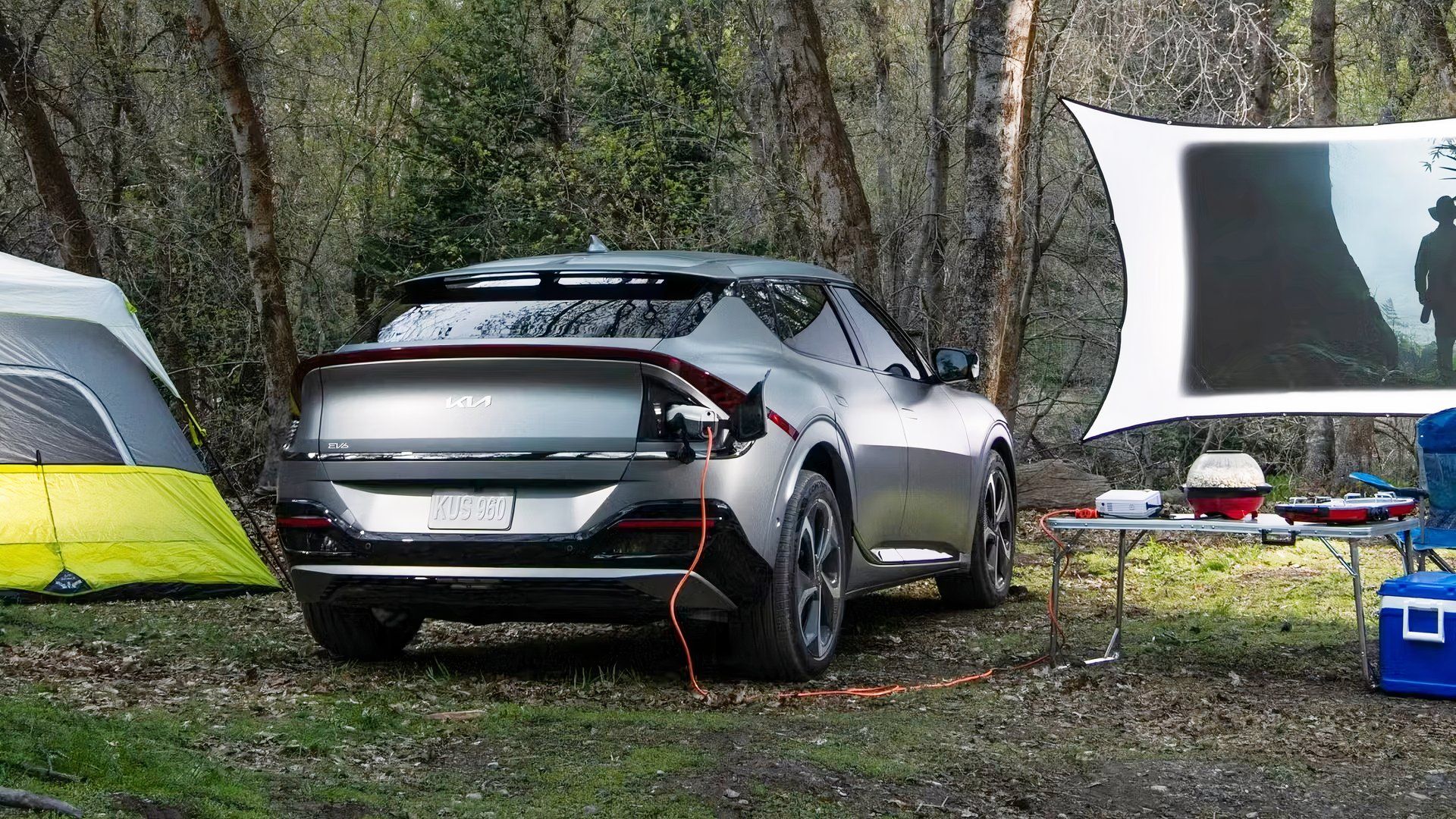
The biggest feature of any EV is what is not in it. EVs have no engines, and therefore none of the maintenance requirements that go with them. However, aside from the ability to safely allow drivers to warm up the cabin while the car is in the garage (after all, there’s no engine exhaust), EVs have a lot of features that must be experienced before they can be truly appreciated. Even something like driving profiles is easy to get used to and surprisingly hard to do without. Here are 10 of our favorite EV features you should know about.
In order to give you the most up-to-date and accurate information possible, the data used to compile this article was sourced from various manufacturer websites and other authoritative sources.

Related
1
Smart Regenerative Braking

For those who have never heard of it, regenerative braking basically uses the car’s own wheels as power generators. The car slows down as the generators take energy away from the wheels and turn it into electricity. This electricity then goes to the car battery. This allows the car to get more range out of a single charge and also helps the conventional brakes last longer. (If the car is already slowing down, the brake pads don’t have to work so hard.)
Regenerative Braking Recaptures Kinetic Energy To Extend Battery Range
A generator like the ones used in regenerative braking is essentially a motor that runs backwards. With normal motors, electricity goes in and spin comes out. But with generators, spin goes in and electricity comes out. Of course, all the electricity coming out of the brakes has to come from somewhere, and in this case it comes from the spinning car wheels. The regenerative brakes literally take the kinetic energy out of the wheels. As a result, the car slows down and the battery gets recharged.
Some Systems Learn Your Driving Habits For Optimized Performance

Everyone drives a little differently. Someone must drive through every commute like they are trapped in a pinball game. Other people do long drives that involve getting the car up to speed and letting the cruise control keep the car at speed for several hours at a time. Some EV braking systems learn how you drive so they can allow for this.
Are you always slamming the brakes because someone just cut in front of you? The car will learn to apply full force at the tap of a pedal so you never rear-end anyone, not even those idiotic drivers who didn’t see you on the highway. Do you usually find yourself gently slowing down more often than hastily stopping? Your car’s brakes will become less “twitchy” so the car doesn’t come to a literal screeching halt every time you need to slow down.
2
Vehicle-to-Grid (V2G) Technology

Ever wish your car could lower your electricity bill? For those who have a dedicated charging outlet in their home, it’s possible. With V2G technology, the local power grid can draw on the car’s battery instead of putting electricity into it. It has often been noted that it would be ludicrously expensive for a power company to construct batteries big enough to store enough electricity for the local grid. However, the proliferation of EVs has essentially created a battery network at no municipal expense.
Vehicle-To-Grid Reduces Strain On The Power Grid And Lowers Energy Bills
Some people may wonder how V2G can possibly lower their own electricity bills. The simple answer is that the power company gives a discount. After all, V2G means that some customers will leave their house with less than a full charge if they happen to unplug the EV while the grid is “borrowing” from it. Money is the only real way to convince people to allow this.
If discounts for inconvenience sound farfetched, electrical companies already have a similar program for air conditioning. If a customer’s wiring system allows it, the power company can turn off their home’s air conditioning for fifteen minutes or so during peak demand times. Unless someone is in the middle of baking, they will barely notice the house getting warmer before the air conditioning turns back on. Power companies use discounts and rebates to persuade people to allow this. By staggering everyone’s short air-conditioning shutoffs across peak hours, the power company can reduce the load on the power grid through the most sweltering parts of the day.
An EV Can Be A Future-Ready Feature For Home Backup Power In Emergencies

In the early days of automobiles, the Ford Model T was unofficially marketed as a portable engine on wheels. Ford was not alone in this. Indeed, many people used their cars as portable engines that could drive themselves to where they were needed. EVs are bringing cars back to their multipurpose beginnings. Instead of using the engine to power machinery, EV owners can use their car to power their whole house. After all, from one perspective, an EV is a very large battery that can transport itself to wherever it is needed.
Of course, it is wildly optimistic to claim that anyone can plug their house into their car and act like nothing is wrong (or at least, not for more than a few minutes). However, EVs allow their owners to do basic things like keep the refrigerator running. This could be useful for those who couldn’t get away from incoming hurricanes. And of course, EVs may become an indispensable source of backup power in places like Texas, where every summer brings official pleas to turn off the lights before the entire state goes dark.

Related
10 Electric Vehicles That Have Bi-Directional Charging
EV batteries aren’t just for driving the wheels. Here’s 10 cars that can power your devices, appliances and more.
3
Over-the-Air (OTA) Updates

It is hardly news that cars contain more electronics with every passing model year. Even if one ignores obvious things like the screens that have replaced mechanical instrument clusters and center-stack knobs, computers control a lot of what goes on under the hood. Since all cars can receive incoming transmissions (how else would you hear your SiriusXM broadcast?), it was only a matter of time before automakers decided to send software updates over the air instead of making customers come to the dealership.
This makes everyone involved a lot happier. Customers can let the car fix itself with no bother at all. The car dealers don’t need to pay their mechanics to plug cars into a computer in the service garage. And the mechanics themselves need not take time away from doing car repairs that involve a wrench set.
OTA Updates Can Improve Performance, Add New Functionalities, Or Fix Bugs

Even the most well-tested cars can have imperfections that only show up after thousands of people start driving them every day. Automakers can (for example) discover that a minor change to how the car accelerates can add a few miles of range per charge. Naturally, it would be foolish to have every car owner take time out of their day to wait at the dealership for such a minor change. But with over-the-air updates, owners can simply find out that their car runs a little bit better than it did when they parked it.
Some Updates Even Unlock Additional Range Or Horsepower
Some software updates can make an EV a lot more fun than it was when it left the dealer lot. Car companies can remotely change the settings on the car, allowing for fun things that the owner may never have realized were options.
This, of course, is controversial. For all of automotive history, owners could use any feature that was installed in the car. This included everything from high-performance engines to creature comforts like air conditioning (and later, heated seats). But today, automakers can remotely disable things that the car already has in it. This can lead to charging subscription fees to make the car do what it is capable of. No one is thrilled at having to pay to use their car after they have already paid to purchase it.
4
Hidden Dash Cameras And Surveillance Modes

About 10 years ago, Russian dashcam videos were a minor internet sensation. Many people watching them realized that while their roads are tamer here at home, a dashcam would be invaluable when filing damage claims with an insurance company or disputing a ticket. EVs have caught up to this. Many of them come with built-in dashboard cameras and other surveillance aids. These are often hidden, which has the subtle advantage of not blocking the windshield.
Surveillance Modes Can Monitor Surroundings When The Vehicle Is Parked
Anyone who has been driving long enough has probably come outside to find a surprise dent on their parked car. In the old days, one had to hope that the perpetrator was good enough to leave a note under the windshield wiper. Today, EV drivers can look through the car’s own security footage and get a license plate number.
Some Systems Notify You In Real-Time Of Suspicious Activity
Of course, recording surveillance isn’t the only use of surveillance cameras on cars. They also allow owners to get footage of red-handed thieves. Since many EVs already “phone home” regularly for software updates, it’s easy for them to transmit camera footage as well. This allows owners to see when someone is trying to break into their car as it happens instead of finding out when they come outside much later.

Add TopSpeed to your Google News feed.
5
Preconditioning For Both The Battery And Cabin

Like the people who drive them, EVs do best at the right temperature. Batteries can get sluggish in cold temperatures. And of course, too much heat can permanently kill them (or at least, take away years of battery life). Most EVs have battery heating and cooling systems to prevent these problems, and also to remove the heat that naturally comes off the battery as it sends energy throughout the car. But even EV buyers who don’t care about the battery will appreciate that EVs can also prepare the cabin for their arrival.
EVs Ensure A Comfortable Cabin Temperature On Hot Or Cold Days
Practically everyone hates those first few minutes of driving when the car is either sweltering or freezing (depending on the time of year). With internal combustion cars, it was incredibly extravagant to idle the engine long enough for the air conditioning or heater to kick in. And for those who had indoor garages, it was unsafe. With EVs, that is a thing of the past. Drivers can easily get the AC or heat going a few minutes early without wasting gasoline. Additionally, an EV’s heater doesn’t need to wait for the engine to warm up. Hot air comes out of the vents within seconds.
Preconditioning Can Be Scheduled Via An App Or Programmed Based On Your Routine

Of course, for people who don’t live in a house with an attached garage (or at least a driveway right outside the front door), it is pointless to trudge across the parking lot (or go on the elevator through their apartment’s parking garage) and push a single button in the car just to start the heater a few minutes early. But with EVs, one can start the AC or heater without going outside, or even bothering to get dressed.
And, of course, in severe cold, EV owners can turn on the battery’s heating system ahead of time. This is roughly the equivalent of turning on an engine block heater on those days when the snow is at least waist-high. By the time the owner is ready to get into the car, the battery will be warm enough to send out power.
Naturally, many people don’t want to log in to their cars every time they drive. And so, EVs allow their owners to schedule their car’s preconditioning in advance. This means that the car will automatically warm its battery and cool its cabin every day, just in time for the owner to get in and drive.

Related
The Future Of In-Car Technology In Electric Vehicles
Get ready for a life-changing in-car experience when these upcoming innovations reach the market in years to come.
6
EVs Have Customizable Driving Profiles

The concept of “driving profiles” seemed somewhere daffy and meaningless only twenty years ago. But profiles started to make a lot more sense when cars began offering more driving modes than simply “engine on” and “engine off.” With the increase in electronic powertrain controls, drivers can now change their suspension from “sport” to “comfort,” adjust how aggressively the car accelerates, and make many other adjustments that previously were impossible without ordering bolt-on parts from a catalog. Different people also have different preferred seat positions and air temperatures. EVs make it almost effortless for people to change all these settings.
EVs Can Automatically Change Their Settings For Different Drivers
EVs can allow different people to have their own presets in the same car. This requires the car to know which user is getting in the driver’s seat, which is either done with key fobs or with an app. (What isn’t an app these days?) This means that no matter who had the car last, every driver can find the car just like they left it. The seat will slide itself into their preferred place. The same goes for air conditioning or heating. Regardless of what the previous driver preferred, the car will set its suspension and powertrain modes back to where the current driver likes them.
EVs Allow Personalized Driving Experiences For Multiple Users
Most cars are shared among multiple drivers. Sometimes it’s family, other times it’s roommates splitting vehicular expenses, and often it’s fleet vehicles. As a result, readjusting the car is a part of many people’s daily routine. But with custom profiles, drivers no longer need to turn down the radio, shift the seat, change the air temperature, or anything else. Even the rearview and side mirrors can swivel into place, so that everything is perfectly lined up by the time the driver is buckled in. It’s easy to see how convenient this can be. And for many parents, this eliminates getting their ears jackhammered by the radio that their teens left at top volume the night before.
7
Enhanced Voice Commands

As touchscreens have superseded knobs and buttons in the center stack, many people have rightly complained that they cannot operate basic controls by feel anymore. The dangers of looking away from the road to navigate a menu system are obvious. However, cars have a lot more controls than radio, air conditioning, and the clock. Although knobs and buttons are returning by popular demand, many features must remain in the menu system. The space for buttons is limited.
Fortunately, many features can remain on the touchscreen without adding any difficulty to driving. (Has anyone ever needed to put their vehicle in “car wash mode” while on the highway?) However, many EVs are adding voice controls. This allows drivers to change the radio station, turn on the seat warmers (or seat coolers if they have the budget), select a satellite radio station without scrolling through a list, and many other things. Even those obscure controls that are hidden deep in sub-menus can be adjusted with a single spoken sentence.
Some Systems Use AI To Understand Natural Speech Patterns
Of course, many people are probably a bit leery of a voice-controlled car. Voice-activated systems (particularly call center menu trees) have a long and irksome history of misunderstanding people. However, AI has improved substantially in recent years. It’s true that AI is still very limited in use. However, it has made voice-based systems a lot easier. AI still can’t do scientific research, but it can understand when people say “Turn up the AC.”
EVs Can Integrate With Smart Home Systems To Control Devices Remotely
Smart homes have proven delightful for those who are technologically adventurous, even though this exciting new field has an uneven history of data privacy. But for those who remain happily ignorant of data breaches, home automation can extend to their vehicle. As the coffeepot begins brewing, the car’s heater can begin warming the cabin. And later in the day, the car can send a signal to its owner’s home, enabling the television and teakettle to turn themselves on.
8
Integrated Navigation with Real-Time Charging Station Info

Until solid-state batteries finally become standard (if ever), range anxiety is a permanent part of EV driving. Current-generation EVs can make it through a round of routine errands without exhausting their batteries, but they can’t go more than a few days without needing to be recharged.
EV manufacturers have taken advantage of existing in-car navigation systems to help drivers know where they can next pull over and recharge. Navigation systems display nearby charging stations and also let the driver know whether their car is compatible. More impressively, many navigation systems will also show whether a charging station is available, which eliminates the frustration of pulling into a parking lot and finding out you made a pointless detour.
EVs Can Predict Remaining Range And Adjusts Routes To Include Charging Stops

Like nearly everything in cars, range prediction is merely an improvement on an old technology. Cars have been telling drivers how many miles are left in the fuel tank for decades, and even adjusting for driving conditions. But today, EV navigation systems can also tell the driver when and where to pull over. For anyone embarking on a road trip or simply driving through unfamiliar places, this makes navigating a lot easier.
Navigation Systems Can Update Dynamically Based On Traffic And Weather Conditions
Not only can EV navigation systems automatically plan recharging stops and add them to the route, they can also update based on what the car is driving through. If a tailwind kicks in, the charging stops on the route may get spaced farther apart. If a traffic jam occurs, the navigation system will determine the nearest charging stops so the car doesn’t exhaust its battery on the air conditioning while moving at one inch per hour.

Related
Electric Car Charging: Costs And How It Works
Charging an EV doesn’t have to be an endless maze of questions. Here are the costs and ways to get your EV on the road.
9
Dynamic Suspension Adjustments

Dynamic suspension is not an EV exclusive, but it certainly makes it easier to get more miles out of the battery. Drivers can also adjust the suspension to be softer when the roads get bumpy, or make it a lot firmer when they care more about performance than spills in the cupholders. The car can also alter its suspension for greater gas efficiency, and automatically add a lot more give when the pavement becomes more free-form.
Dynamic Suspension Can Automatically Lower The Vehicle At High Speeds To Improve Aerodynamics
EVs can automatically adjust their ride height as speeds change. Unfortunately, this isn’t nearly as dramatic or entertaining a height change as the aftermarket hydraulics that were popular in the 1990s. (A 1987 Crown Victoria never looked so good as when it was driving four feet off the ground.) However, dynamic suspension can lower the car enough that drivers definitely notice the effect on battery range, even if they don’t actually feel the car dipping down.
Some EVs Allow Manual Control Through The Infotainment System
Cars aren’t capable of higher-level reasoning. Automatic suspension doesn’t know when the driver needs an extra inch or two of ride height in order to clear the bad pavement or to ascend a particularly steep driveway. Or maybe, someone has their own strongly-held beliefs about suspension, regardless of whether the automated system agrees. Many EVs therefore allow the driver to manually change the suspension settings.
10
Biometric And Keyless Entry Features

When button-start cars with wireless fobs first came onto the market, they seemed pointless. However, everyone approaching their cars with their hands full soon discovered how wonderful it is when the car unlocks itself. It is now possible to put one’s car key in one’s pocket or purse and then forget about it all day. After all, the car only needs to sense that the key is in the vehicle. However, wireless keys can still be misplaced. Just as wireless fobs eliminated rummaging for car keys, fingerprint scanners and face recognition promise to eliminate having to look for car keys in the first place. People misplace their car keys all the time, but no one has ever mislaid their own face.
Additionally, some systems monitor drowsiness or attention levels while driving. If a driver gets too distracted, the car can flash various warning lights to snap their attention back onto the road and hopefully persuade them to pull over and rest.
Keyless Entry Allows Starting, Unlocking, Or Sharing Access Via An App
Of course, if one’s car uses fingerprint-based access, it’s impossible to simply hand over the keys when letting someone else drive it. While this may appeal to particularly possessive car owners, everyone else wants the option to lend out their car – even if they rarely do. EVs allow their owners to use the vehicle’s app to grant other people driving privileges. It’s not as quick as dropping a keychain into someone’s hand, but it also means that the borrower can’t lose the keys.
link




More Stories
Tech Plus Product: A Comprehensive Review of Its Features and Benefits
Here Are the New Features Coming in iOS 26.4
Tested on Palestinians: Epstein, Israel’s Barak pushed spy tech in Nigeria | Features