

Printed Electronics
Introduction
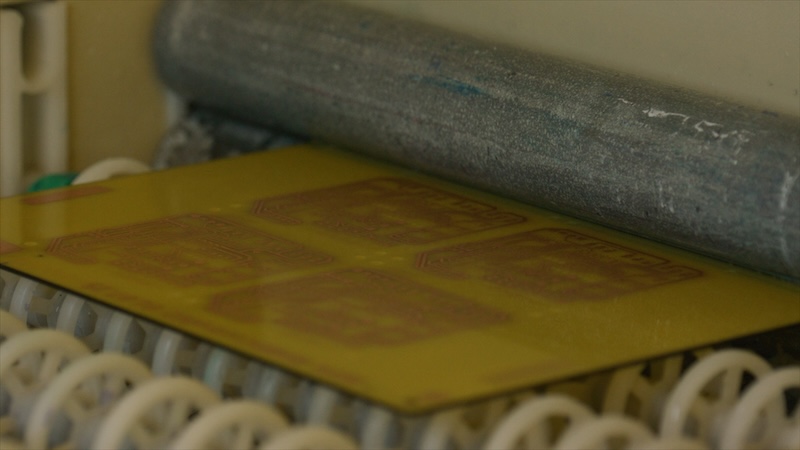
Printed electronics refers to the methods of fabricating electronic devices by depositing functional inks (conductive, semiconductive, dielectric) onto substrates (plastic, paper, flexible films) using printing or additive techniques (inkjet, screen, gravure, flexography, etc.). This contrasts with conventional subtractive fabrication (etching silicon wafers), enabling lower-cost, flexible, large-area, and lightweight electronic circuits.
Download Full PDF Sample Copy of Market Report @ https://exactitudeconsultancy.com/request-sample/74181
As wearables, Internet of Things (IoT), smart packaging, flexible displays, sensors, RFID tags, and low-cost electronics expand, printed electronics is transforming from a niche enabling technology into a mainstream manufacturing path. Over the next decade, the printed electronics market is set for rapid scale, innovation, and consolidation.
Market Overview & Key Highlights
• The global printed electronics market is estimated at USD 16.82 billion in 2024, and projected to reach USD 83.77 billion by 2034, growing at a CAGR of ~17.42% from 2025 to 2034.
• Grand View Research estimates that the market was USD 8.66 billion in 2021 and expects it to reach USD 52.58 billion by 2030, at ~22.3% CAGR.
• Markets & Markets projects the market to grow from USD 19.46 billion in 2025 to USD 39.85 billion by 2030, at ~15.4% CAGR.
• Allied Market Research values the 2022 market at USD 9.4 billion and expects growth to USD 55.7 billion by 2032, at ~20.1% CAGR.
• Roots Analysis presents a more aggressive forecast: USD 32.28 billion in 2024 growing to USD 175.2 billion by 2035 (CAGR ~16.62%).
Interpretation & Midpath Projection
Given these diverse forecasts, a realistic midcase for 2024-2034 would position the market around USD ~17-20 billion base and rising toward USD ~80-100 billion+ by 2034, with annual growth in the mid-teens.
Segmentation Analysis
Below is a clean segmentation framework commonly used in printed electronics markets:
By Printing / Fabrication Technology
• Inkjet Printing
• Screen Printing
• Gravure Printing
• Flexographic Printing
• Others (e.g. roll-to-roll, aerosol jet, etc.)
By Material / Component
• Inks / Functional Materials (conductive, dielectric, semiconductive)
• Substrates (plastic film, flexible substrates, paper, textiles)
• Other Components (barriers, encapsulants, interconnects)
By Application / Device Type
• Displays & Flexible / Wearable Screens
• Sensors / Biosensors / MEMS
• RFID / Smart Tags
• Printed Batteries / Energy Devices
• Solar / Photovoltaics / Energy Harvesting
• Lighting (OLED, electroluminescent, printed lighting)
• Other printed circuitry / interconnects
By End-Use Industry
• Consumer Electronics & Wearables
• Automotive & Transportation
• Healthcare / Medical Devices
• Packaging & Retail (smart packaging)
• Aerospace & Defense
• Industrial / IoT / Smart Infrastructure
By Region
• Asia-Pacific
• North America
• Europe
• Latin America
• Middle East & Africa
Segmentation Summary
Ink materials dominate revenue share, as they are critical to functionality and recurring purchase. In technology, screen printing remains a strong baseline, with inkjet growing for fine resolution needs. Displays, sensors, and RFID are among the highest demand application verticals. In end use, sectors such as consumer electronics & wearables, automotive, and smart packaging drive strong adoption. Regionally, Asia-Pacific leads both volume and investment in printed electronics infrastructure.
Explore Full Report here: https://exactitudeconsultancy.com/reports/74181/printed-electronics-market
Regional Analysis
Asia-Pacific
Asia-Pacific is a strong leader and fastest-growing region. It dominates in manufacturing scale, materials supply, electronics ecosystems, and adoption in consumer, IoT, automotive, and wearable domains
North America
North America remains a strong region for innovation, high-end markets (wearables, medical devices), and integration with semiconductor and electronics supply chains. Companies in the U.S. and Canada often lead in R&D and pilot commercialization.
Europe
Europe is focused on specialized printed electronics applications (smart packaging, industrial sensors, medical), sustainability, and regulatory alignment. Many European projects emphasize collaboration between universities, startups, and industry.
Latin America
Latin America is an emerging region. Adoption is nascent but rising in smart packaging, sensors for agriculture, and wearable applications. Domestic electronics capacity is growing slowly, supporting local adoption.
Middle East & Africa
This region is in early-stage penetration. Some urban centers or high-tech hubs may adopt printed electronics, but scale remains limited due to infrastructure, demand, and industrial ecosystem constraints.
Regional Summary
Asia-Pacific is the core growth engine; North America and Europe anchor cutting-edge development and premium use; Latin America and MEA are frontier markets with opportunity for leapfrog adoption in smart infrastructure and IoT.
Market Dynamics & Trends
Key Growth Drivers
1. Demand for Flexible, Lightweight, and Low-Cost Electronics
Printed electronics enable flexible displays, foldable devices, conformal sensors, and electronics embedded in textiles or packaging.
2. Expansion of IoT, Smart Sensors & Connected Devices
Massive growth in sensors and distributed electronics requires cost-effective, scalable electronics fabrication.
3. Wearables & Medical Devices
Printed biosensors, health patches, implantables, and monitoring devices increasingly rely on printed circuit technologies.
4. Smart Packaging & Consumer Engagement
Printed electronics allow embedded RFID, displays, indicators, and interactivity directly on packaging.
5. Advances in Materials & Inks
Better conductive inks (nanoparticles, graphene, etc.), stretchable materials, and hybrid composites are improving performance.
6. Integration with Traditional Electronics (Hybrid Systems)
Printed circuits can complement traditional silicon electronics, reducing cost and weight where full silicon isn’t required.
Challenges & Constraints
• Lower Performance Compared to Conventional Electronics
Printed devices typically lag in speed, integration density, and longevity.
• Reliability, Durability & Environmental Stability
Printed circuits must withstand mechanical stress, temperature, humidity, and wear.
• Scalability & Yield Issues
Manufacturing defects, alignment, registration, and yield control remain challenges.
• Material Cost & Compatibility
High-performance inks and substrates often remain expensive or supply-constrained.
• Standardization & Integration Complexity
Merging printed circuits with conventional electronics, packaging, and interconnects requires hybrid approaches.
Emerging Trends
• 3D Printed / Hybrid 3D Electronics
Stacking printed layers, embedding components, or combining additive electronics with 3D-printed structures.
• All-Carbon / Recyclable Printed Electronics
Research is showing fully printed electronics using carbon materials (graphene, CNTs) that can be more recyclable and sustainable. arXiv
• In-Mold Printed Electronics (IME)
Embedding printed circuitry during injection molding of plastics for products (e.g. automotive parts, consumer goods).
• Printed Energy & Storage (Printed Batteries / Supercapacitors)
Integrated printed power sources to complement printed circuitry for autonomous systems.
• Smart / Sensor Embedded Surfaces
Surfaces, fabrics, packaging with integrated sensing, touch, and display capabilities.
Get Your Exclusive Offer with up to 10% Discount : https://exactitudeconsultancy.com/checkout/?currency=USD&type=single_user_license&report_id=74181
Competitive Landscape
The printed electronics market is composed of material suppliers, equipment/printing machine companies, electronics firms, and integrated OEMs.
Notable Players
Prominent companies and entities include LG Display, Samsung Electronics, Molex, Agfa-Gevaert, PARC (Palo Alto Research Center), DuPont, Nissha, BASF, NovaCentrix, E Ink Holdings, Thin Film Electronics among others.
Strategic Approaches
• Vertical integration of inks + printing equipment + process expertise
• Strategic partnerships & alliances with OEMs in automotive, medical, packaging domains
• Investment in R&D & IP around advanced materials, resolution scaling, durability
• Pilot / commercialization partnerships to validate in end markets
• Localizing capacity near demand centers to reduce shipping of printed components
Outlook & Outlook Summary
The Printed Electronics Market is one of the more dynamic, high-growth segments in electronics and materials domains. Based on current forecasts, the industry is expected to grow from a base of approximately USD 16-20 billion in the mid-2020s to USD ~80-100 billion+ by 2034, at compounded growth in the ~15-18% annual range.
Key Takeaways:
• Printed electronics will complement conventional electronics rather than fully replace them; hybrid systems will dominate early uptake.
• Success depends heavily on material innovation, manufacturing yield, durability, and system integration.
• High growth verticals include wearables, smart packaging, IoT sensors, automotive printed surfaces, medical devices.
• Regions investing in advanced manufacturing (Asia-Pacific, North America, Europe) will lead; frontier markets may adopt in specific use cases.
• Players with holistic capabilities across materials, equipment, process, and collaboration with OEMs will lead the competitive race.
This report is also available in the following languages : Japanese (プリンテッドエレクトロニクス), Korean (인쇄 전자), Chinese (印刷电子), French (Électronique imprimée), German (Gedruckte Elektronik), and Italian (Elettronica stampata), etc.
Request for a sample of this research report at (Use Corporate Mail ID for Quick Response) @ https://exactitudeconsultancy.com/reports/74181/printed-electronics-market#request-a-sample
Our More Reports:
Wire-Cut Submerge Type EDM Market
https://exactitudeconsultancy.com/reports/75056/wire-cut-submerge-type-edm-market
Video Wall Display Solutions Market
https://exactitudeconsultancy.com/reports/75057/video-wall-display-solutions-market
Polyglyceryl-6 Dicaprate Market
https://exactitudeconsultancy.com/reports/75058/polyglyceryl-6-dicaprate-market
About Us
Exactitude Consultancy is a market research & consulting services firm which helps its client to address their most pressing strategic and business challenges. Our market research helps clients to address critical business challenges and also helps make optimized business decisions with our fact-based research insights, market intelligence, and accurate data.
https://bulletin.exactitudeconsultancy.com/
https://www.thehealthanalytics.com/
https://www.analytica.global/
https://www.marketintelligencedata.com/
https://www.marketinsightsreports.com/
https://exactitudeconsultancy.com/
Connect Us:
Irfan Tamboli
PHONE NUMBER +1 (704) 266-3234
EMAIL ADDRESS: [email protected]
This release was published on openPR.
link



More Stories
Researchers Reveal Molecular Secrets of Flexible Electronics
Growth Outweighs Uncertainty for Flexible and Printed Electronics: OE-A Survey
SEMI FlexTech Announces 2026 FLEXI Award Winners